
When vision loss makes it harder to read, recognize faces, manage medications, or move confidently through familiar spaces, the right support can make everyday life more manageable. Low vision care in Wilmington includes personalized evaluations, low vision aids and devices, and practical recommendations designed around the tasks that matter most to you.
If glasses, contact lenses, medication, or surgery cannot fully restore your vision, your doctor can help identify solutions such as magnification tools, specialized lighting, contrast-enhancing filters, and electronic reading aids to help you use your remaining sight more effectively. English- and Spanish-speaking patients are welcome, and walk-in appointments are available during office hours for patients experiencing new or worsening vision difficulties.
What is low vision?
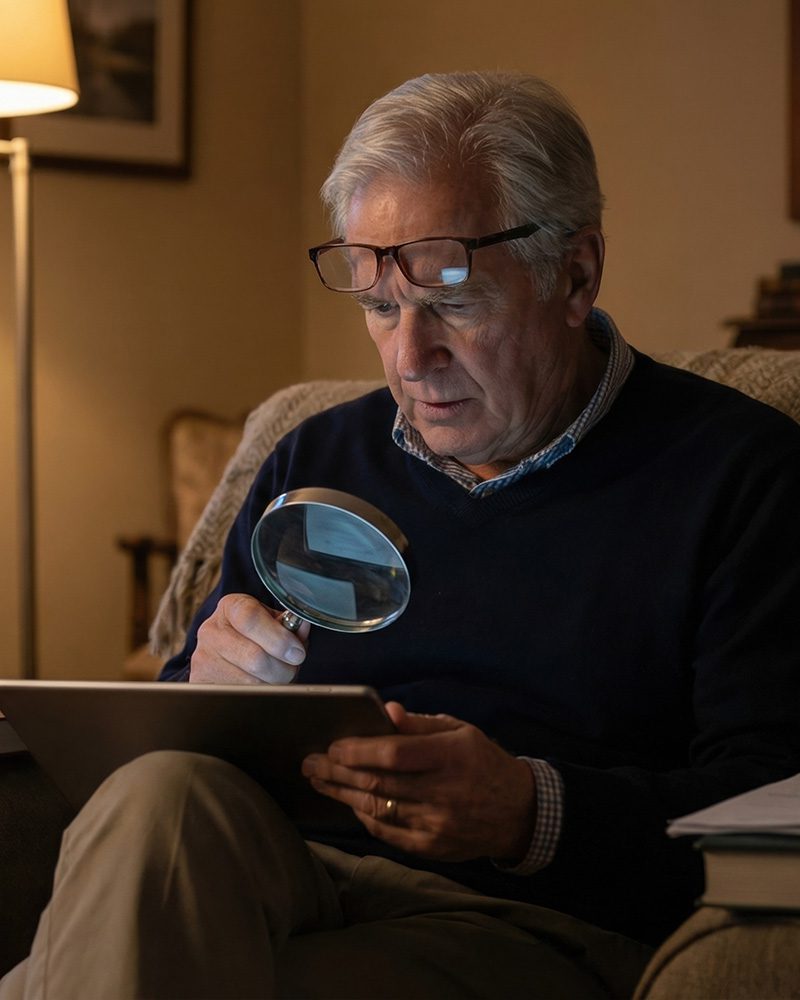
Low vision is a visual impairment that continues to affect everyday tasks even with an up-to-date prescription. It is not the same as total blindness, but it can make reading, watching television, driving, recognizing faces, or seeing important details more difficult.
Low vision can result from a variety of eye conditions, including:
- Retinitis pigmentosa
- Inherited retinal diseases
- Eye injuries or brain trauma
Who can benefit from low vision services?
Low vision services may be helpful for people who have experienced vision loss that cannot be fully corrected with standard glasses or contact lenses. You may benefit from an evaluation if you:
- Need extra help seeing up close or far away, even with your current prescription
- Find reading, cooking, writing, or managing medications more difficult
- Struggle with glare, contrast, or seeing in low-light settings
- Have been diagnosed with an eye disease that affects your vision
- Want to maintain more independence with everyday activities
Low vision care is tailored to your individual goals. Whether you want to read more comfortably, see faces more clearly, or navigate daily tasks with greater ease, your doctor can help identify options that fit your needs.
Low vision aids and device management
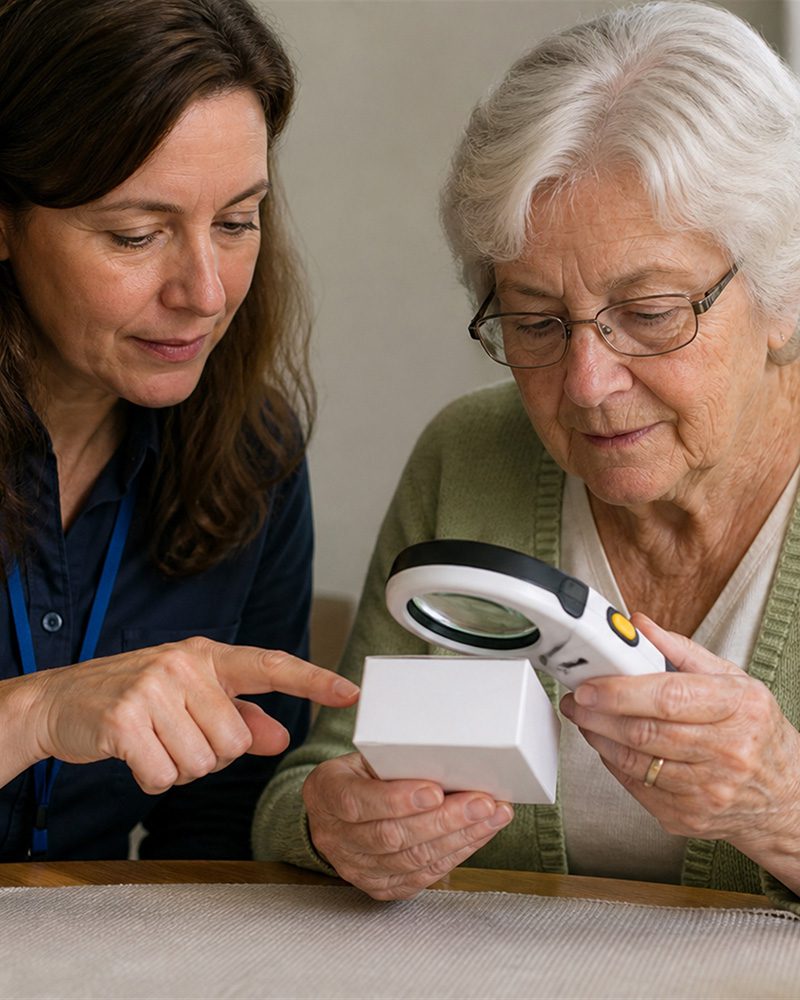
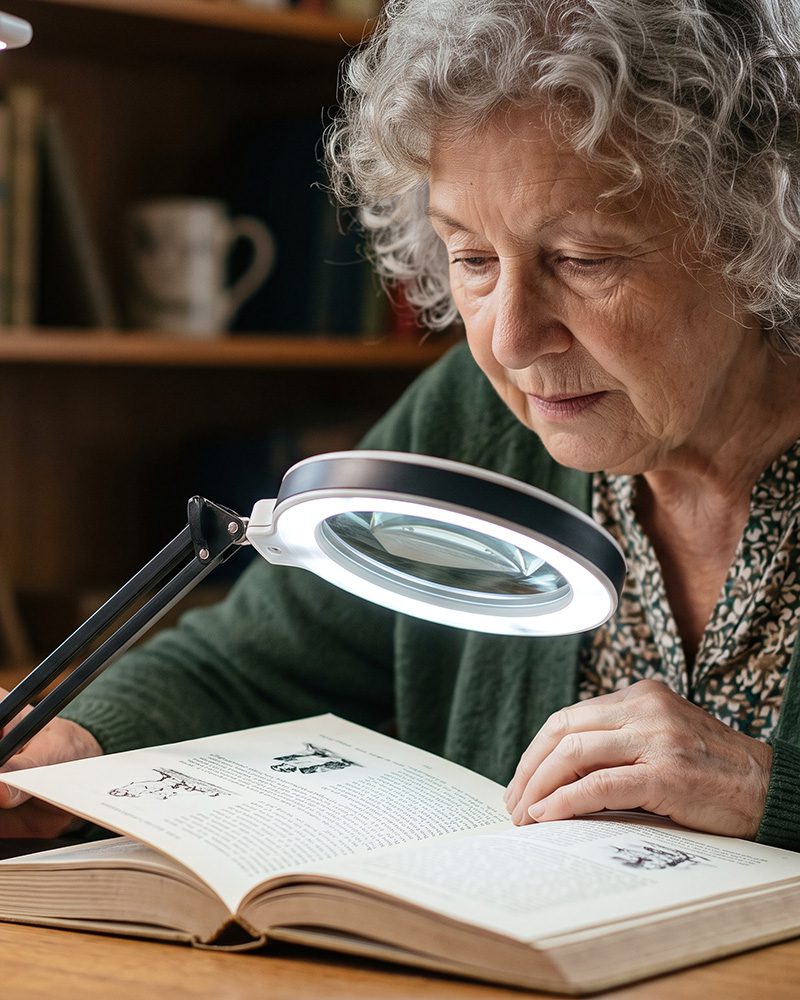
Low vision devices can help you use your functional vision more effectively. During a comprehensive eye exam, your doctor can discuss tools and recommendations based on the tasks that matter most to you.
Options may include magnification devices, specialized lighting, contrast-enhancing filters, telescopic or bioptic aids, electronic reading tools, and other accessibility solutions. Guidance on using these devices is an important part of low vision care, helping you incorporate them into your daily routines with more confidence.
Get back to doing what you love
Vision loss can be frustrating, but it does not mean you have run out of options. Personalized low vision care can help you find practical ways to stay engaged in the activities you value. A 2021 meta-analysis found that low vision rehabilitation can improve vision-related quality of life for people with visual impairment.¹
If reduced vision is affecting your independence or quality of life, schedule a low vision evaluation in Wilmington to discuss your needs and next steps.
Reference: