
Expert diagnosis & cataract surgery post-op care
Cataracts are a common part of aging, but changes in your vision should not be ignored. If you are noticing increasing blur, glare, or trouble seeing at night, a detailed eye exam can help determine whether cataracts are affecting your vision.
Advanced testing, including OCT and retinal imaging, helps monitor how cataracts are affecting your eyes and when treatment may be appropriate. English- and Spanish-speaking patients can receive cataract care in Wilmington, and walk-in appointments are available during office hours for concerning vision changes. If surgery is needed, care can be coordinated with a trusted ophthalmologist, with follow-up support after your procedure.
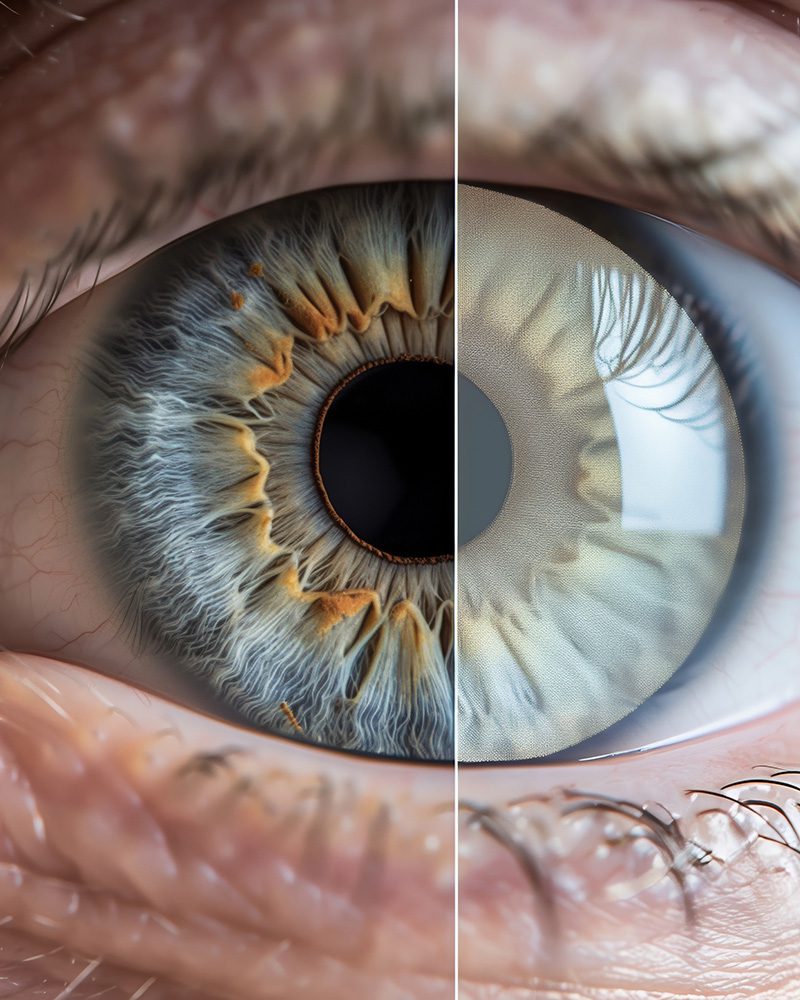
What are cataracts?
A cataract is a clouding of the eye’s normally clear natural lens. It develops when proteins in the lens break down and clump together, making it harder for light to pass through clearly.
Cataracts usually become more noticeable over time. While they are most often related to aging, they can also develop after an eye injury or in connection with certain medical conditions, including diabetes.
Cataract symptoms
Cataracts often develop gradually, so vision changes may be subtle at first. As a cataract progresses, you may experience:
- Blurry or hazy vision
- Increased sensitivity to light or glare
- Trouble seeing at night
- Halos around lights
- Difficulty reading small print
- Colors that appear dull or faded
- More frequent changes to your prescription
If vision changes are making daily activities more difficult, a cataract evaluation in Wilmington can help identify the cause and guide your next steps.


Treatment for cataracts
In the early stages, cataracts can often be managed without surgery. Your doctor may update your prescription for glasses or contact lenses, recommend glare-reducing lens options, or suggest practical adjustments such as using brighter lighting at home.
Regular monitoring helps track changes in your vision and determine when cataract surgery may be the right choice. Surgery is typically considered when cataracts begin to interfere with your quality of life or everyday activities, such as reading, driving, working, or seeing faces clearly.
Cataract surgery has a strong record of visual outcomes when it is appropriate for the patient. In a large study of more than 368,000 cataract surgeries, 94.3% of patients achieved corrected vision of 20/40 or better within 90 days after surgery.¹ Individual results can vary based on overall eye health and other conditions affecting vision.
When cataract surgery is recommended, your care can be coordinated with a trusted ophthalmologist. Follow-up visits help monitor healing, address vision changes, and support a smooth recovery after surgery.
Visit us for cataract diagnosis and co-management in Wilmington
If you have noticed gradual vision changes and think cataracts may be the cause, schedule an eye exam. Early evaluation can provide clarity about your eye health and help you make an informed decision about treatment.
Reference: