
Blurred central vision, wavy lines, and trouble seeing fine details can be signs of macular degeneration. Advanced retinal technology — including Optos retinal imaging and optical coherence tomography (OCT) — can help evaluate the macula, establish a baseline, and monitor changes over time.
Early detection matters. A thorough evaluation can help identify age-related macular degeneration (AMD) before it significantly affects daily activities like reading, recognizing faces, or driving.
Care is available for English- and Spanish-speaking patients. If you have noticed a new or concerning change in your central vision, walk-in appointments are also available for prompt evaluation during office hours.

What is macular degeneration?
Macular degeneration, or age-related macular degeneration (AMD), is a progressive eye disease that affects the macula — the central part of the retina responsible for sharp, detailed vision. It is most common in adults over age 50 and is a leading cause of vision loss in older adults.¹
There are two main types of macular degeneration:
- Dry AMD is the most common form. It develops gradually as the macula thins over time, leading to a slow loss of central vision.
- Wet AMD is less common but more serious. It occurs when abnormal blood vessels grow beneath the retina and leak fluid or blood. This can cause sudden or rapid central vision changes.
Symptoms and risk factors
AMD may not cause obvious symptoms in its early stages. As it progresses, you may notice:
- Blurred or reduced central vision
- Straight lines that appear wavy or distorted
- Difficulty reading or recognizing faces
- A dark, blurry, or empty area in the center of vision
- Less vivid colors or more difficulty seeing in low light
The exact cause of AMD is not fully understood, but risk factors include age, family history, smoking, high blood pressure, prolonged UV exposure, and a diet low in leafy greens and antioxidants.
If you notice sudden vision changes, new distortion, or a dark spot in your central vision, contact an eye doctor promptly.

Diagnosis and monitoring for macular degeneration
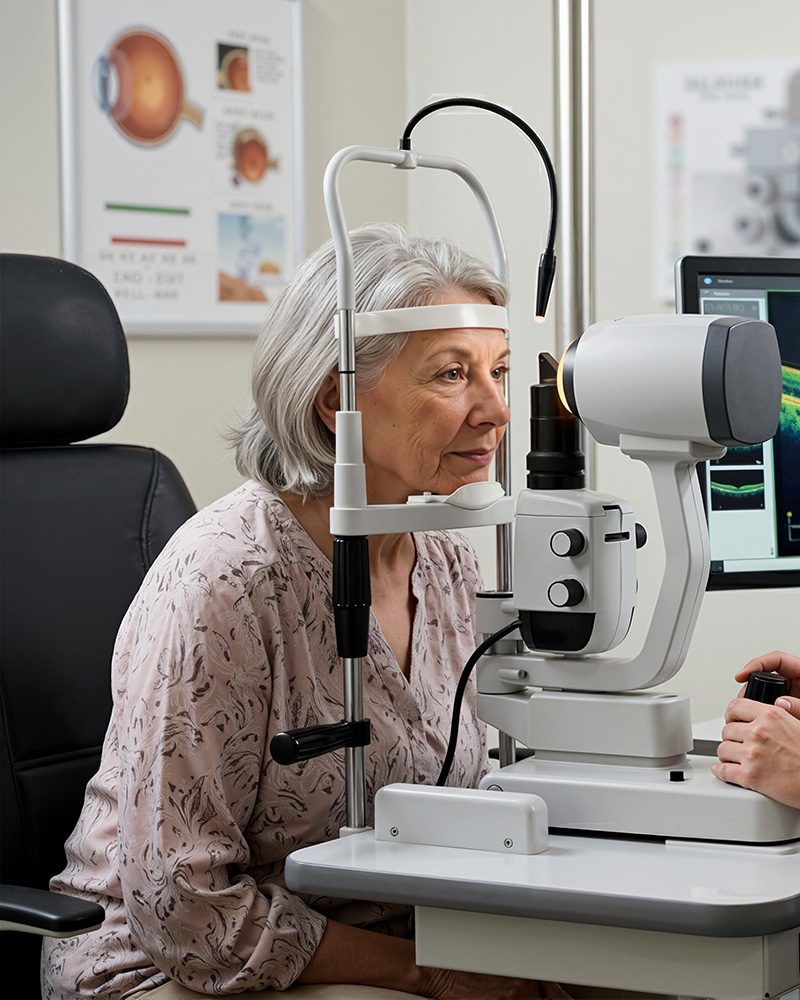
An eye exam can identify early signs of macular degeneration and other changes in retinal health. Your evaluation may include a dilated eye exam, Optos retinal imaging, and OCT testing to view the retina in detail.
These diagnostic tools allow your doctor to monitor the macula closely and recommend a care plan based on the type and stage of AMD. Ongoing monitoring is particularly important because changes can occur before you notice a difference in your vision.
Treatment for macular degeneration
While there is no cure for macular degeneration, early diagnosis and proactive care can help protect your remaining vision.
For dry AMD, recommendations may include regular monitoring, lifestyle adjustments, UV protection, and nutritional guidance based on your individual eye health. Wet AMD often requires prompt treatment from a retinal specialist. When advanced retinal care is needed, your doctor can coordinate with the appropriate specialist and continue to provide follow-up care and co-management.
If macular degeneration is affecting daily tasks, low vision devices and personalized recommendations may help you use your remaining vision more effectively.
Protect your vision from AMD
Routine eye exams are an important part of protecting your sight, especially if you are over 50 or have known risk factors for macular degeneration. A detailed medical eye evaluation can help detect AMD early, monitor its progression, and connect you with the right care when needed.
Reference:
1. Age-Related Macular Degeneration (AMD), National Eye Institute