
A child’s vision plays an important role in learning, development, and everyday confidence. A pediatric eye exam in Wilmington can identify vision concerns that may not be caught during a school screening, including issues with focusing, eye coordination, and distance vision.
Pediatric eye exams are available for children ages 5 and older. English- and Spanish-speaking families are welcome, and walk-in appointments are available during office hours for concerns about your child’s vision.
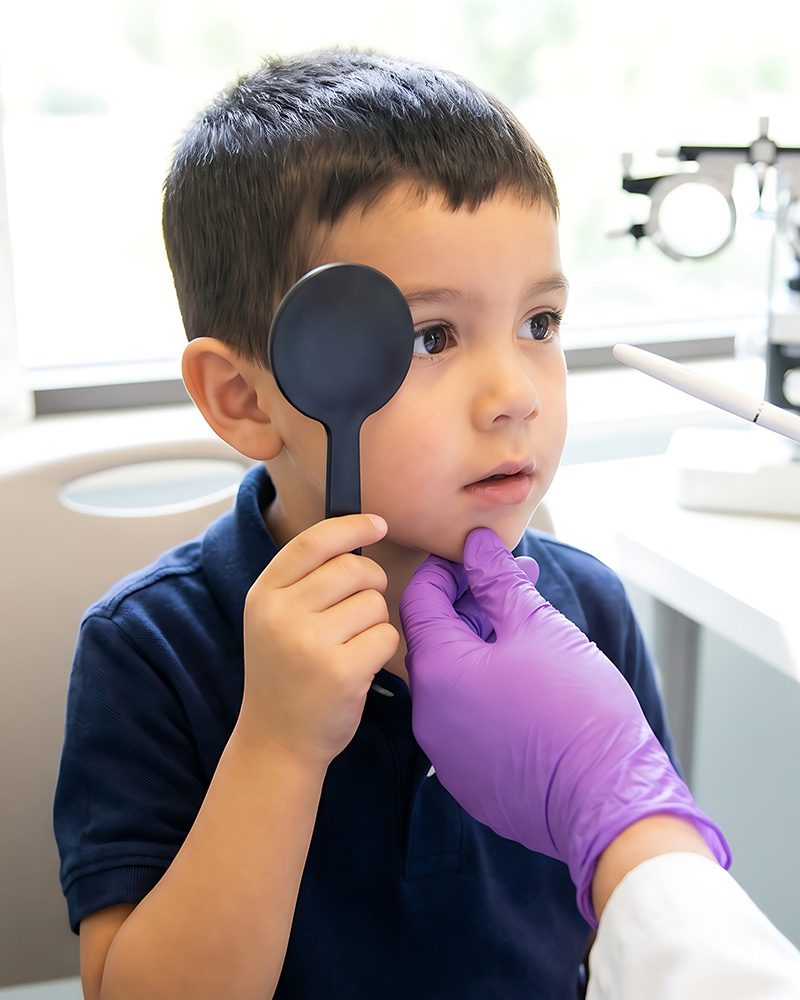
What to expect during a kid’s eye exam
A pediatric eye exam is designed to be thorough while helping your child feel comfortable throughout the visit. Your doctor will look beyond blurry vision to evaluate how your child’s eyes work together, focus, track, and process visual information.
Your child’s comprehensive eye exam may include:
- Vision testing for near and distance
- Binocular vision and eye coordination testing
- Eye movement and focusing assessments
- An evaluation of overall eye health
- A refraction to determine whether glasses are needed
- Discussion of your child’s visual habits, screen use, and any concerns at school or home
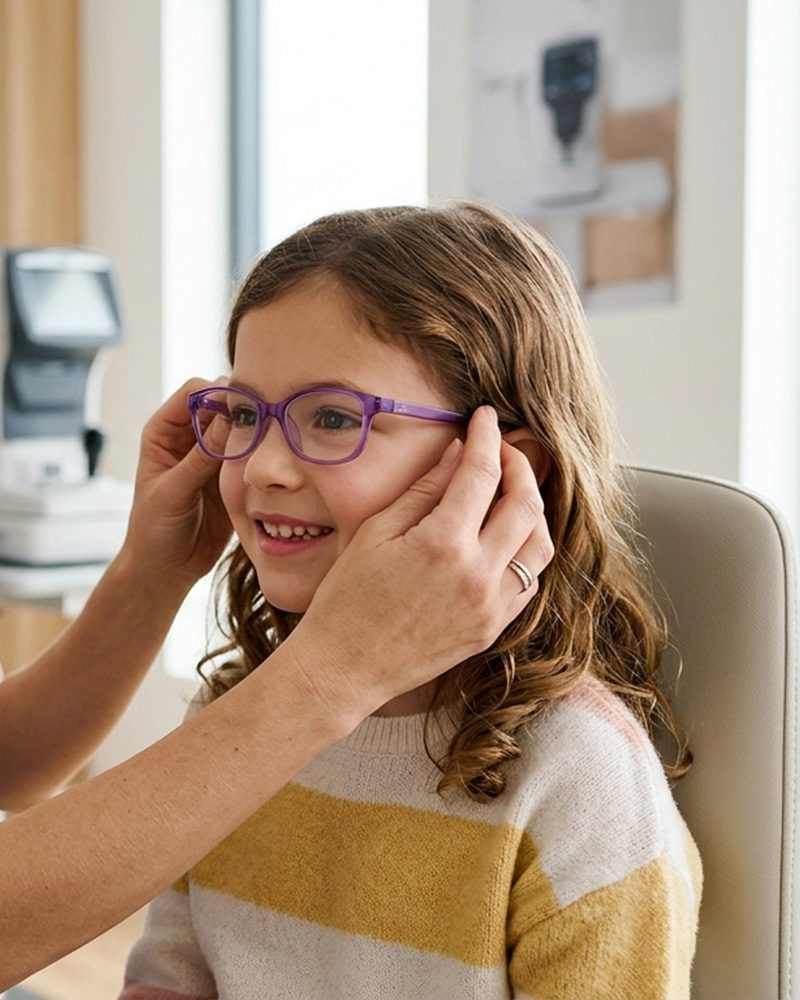
If your child needs vision correction, your doctor can recommend children’s eyeglasses that fit comfortably and support their daily activities.
Myopia management for children
Nearsightedness, also called myopia, can make it difficult for children to see the board at school, recognize faces from a distance, or participate comfortably in activities that require clear distance vision. Because myopia often progresses as children grow, early monitoring is important.
If your child’s prescription is increasing, your doctor can discuss myopia management options designed to help slow the progression of nearsightedness. Available options include MiSight® 1 day contact lenses and Stellest® lenses, depending on your child’s age, eye health, prescription, and daily routine.
Signs of vision problems in children
Children may not always recognize or explain that they are having trouble seeing. Schedule an eye exam if you notice your child:
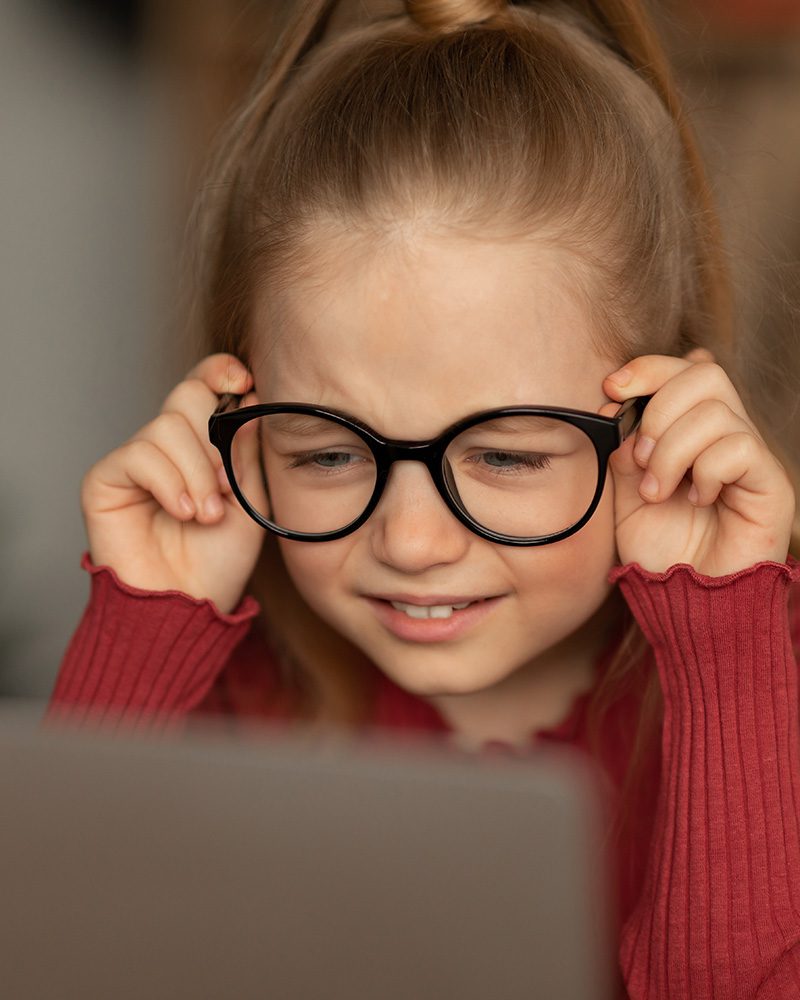
- Squinting, rubbing their eyes, or tilting their head to see
- Closing or covering one eye
- Complaining of headaches or eye strain
- Struggling to read, focus, or see the board at school
- Holding books or screens very close
- Avoiding reading or other detail-focused activities
- Reporting blurred vision, double vision, or light sensitivity
Even without obvious symptoms, regular pediatric eye exams can help identify vision changes early and support your child’s visual development.
Schedule your child’s eye exam
Whether your child needs their first eye exam, has new vision concerns, or needs an updated prescription, a detailed evaluation can help support clear and comfortable vision.